How to Get a U.S. Visa: A Step-by-Step Guide to the Application Process
Whether you are looking to visit, study, launch a business, take a new job, or permanently relocate to the United States, you will need to go through the process of obtaining a visa. A U.S. visa is required for lawful entry into the United States.
There are different visa categories, government agencies involved, required forms, interviews, documentation standards, and strict timelines. A simple mistake can delay your case or worse, lead to a denial.
A Step-by-Step Guide to the Application Process
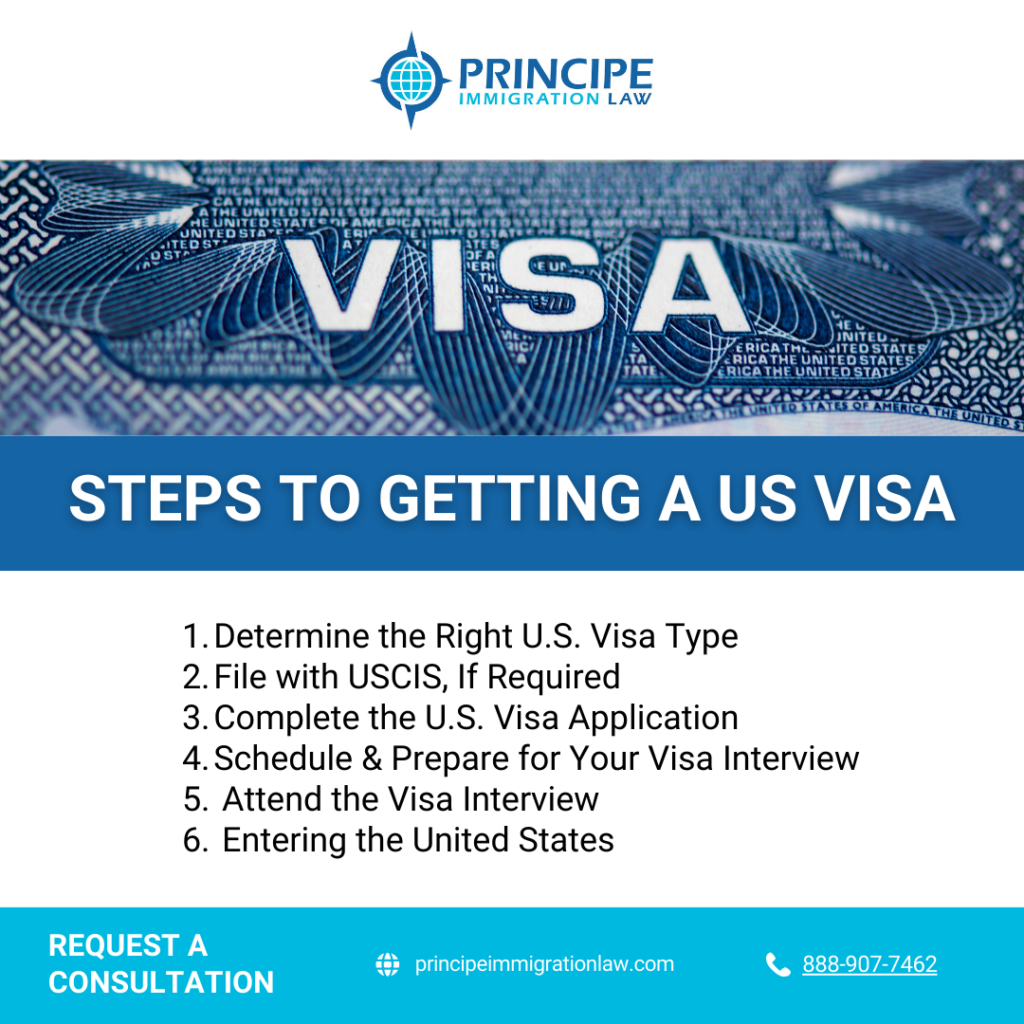
Here is a clear, strategic breakdown of how the U.S. visa process works. You should anticipate a series of steps including choosing the right visa classification; filing with U.S Citizenship and Immigration Services (USCIS), when required; completing and submitting the U.S. visa application, scheduling and preparing for the visa interview, attending the visa interview, and ultimately, coming to the United States.
 Step 1: Determine the Right U.S. Visa Type
Before filing anything, you need to consider two critical questions:
- Is your goal temporary or permanent?
- What is the purpose of your stay?
Choosing the right visa classification streamlines the application process and is one of the most important decisions you will make.
There are two main visa categories:
Nonimmigrant Visas (Temporary Stay)
These are for individuals coming to the U.S. for a limited, specific purpose:
- Visitor Visas (B-1/B-2)
- Student Visas (F-1/M-1)
- Work Visas (E-1/E-2, H-1B, L-1, O-1, P visas, etc.)
- Exchange Visitor (J-1)
Each visa has strict eligibility requirements, permitted activities, and time limits.
Immigrant Visas (Permanent Residence)
These are for individuals seeking a green card (lawful permanent residence):
- Family-Based Immigration (through a U.S. or LPR spouse, or family member)
- Fiancé(e) Visa (K-1)
- Employment-Based Immigration (EB-1, EB-2, EB-3)
Choosing the wrong visa can delay your goals by months or even years. This is often the most strategic decision in the entire process.
Step 2: File with USCIS, If Required
Some visas require an approved petition before you can even apply for a visa.
Most nonimmigrant work visas and immigrant visas require a petitioner to file with the USCIS:
- Employment-based nonimmigrant work visa require Form I-129
- Family-based cases require Form I-130
- Employment-based cases require Form I-140
Once approved, the appropriate visa application is filed with the U.S. Department of State through its Consular Electronic Application Center.
Immigrant visas are processed through the consular post in the applicant’s home country (or country of legal residence) and the case is transferred to the National Visa Center (NVC) for further processing.
Many nonimmigrant visas (such as visitor or student visas) do not require a prior USCIS petition approval, and you can proceed directly to the visa application stage.
Step 3: Complete the U.S. Visa Application
This step involves completing the online application:
- Form DS-160 (nonimmigrant visas)
- Form DS-260 (immigrant visas)
You can expect to spend approximately 60–90 minutes answering detailed questions about:
- Personal history
- Employment and education
- Travel history
- Background and security questions
After submission:
- Pay the required visa fee (non-refundable and non-transferable)
- Print the confirmation page
Accuracy is critical. Even minor nconsistencies can create problems during your visa interview.
Step 4: Schedule & Prepare for Your Visa Interview
Visa interviews are typically scheduled at the U.S. Embassy or Consulate in your home country.
To schedule, you will need:
- Your passport number
- Visa application confirmation number
- Visa fee receipt
Next, comes preparation for the visa interview, which can be one of the most overlooked stages in the process.
Required Documents:
- Valid passport (at least 6 months beyond intended stay)
- DS-160 or DS-260 confirmation page
- Appointment confirmation
- Visa fee receipt
Supporting Documentation:
Depending on the visa type, you may need:
- Financial records (bank statements, tax returns)
- Employment letters
- Academic records
- Business documentation
- Evidence of ties to home country
- Category-specific evidence (for example, extraordinary ability documentation for O-1 cases or a business plan for E-2 cases)
Documentation is not just paperwork, it tells your story.
Step 5: Attend the Visa Interview
The consular interview is a critical decision stage in the process.
A U.S. consular officer will:
- Review your application
- Evaluate supporting documents
- Ask questions about your purpose of travel
- Collect/review biometrics i.e. fingerprint scans and photos
The officer must be satisfied that you meet all eligibility requirements. For nonimmigrant visas, you will need to show that you intend to comply with the terms of a temporary stay in the United States. If approved, your passport with the visa stamp will be returned according to the selected delivery method.
Step 6: Enter the United States
A visa allows you to travel to a U.S. port of entry, but it does not guarantee admission into the United States. At the airport or land border, a U.S. Customs and Border Protection (CBP) officer makes the final determination.
If admitted:
- Your entry is recorded
- An electronic I-94 is created
- Your period of authorized stay is set
Please note: Your visa expiration date is not the same as your authorized stay in the U.S. The period of stay is governed by your I-94 Record, which tells you when you need to depart the United States or extend your stay.
Frequently Asked Questions:
How long does it take to get a U.S. visa?
Processing times vary widely based on:
- Visa category
- Country of application
- Government backlogs
Some nonimmigrant visas may take weeks or months to obtain. Immigrant visas often take several months or much longer.
Can my visa be denied?
Yes. Common reasons for denial include:
- Insufficient documentation
- Failure to meet eligibility criteria
- Weak evidence of ties to home country
- Inconsistencies in the application or interview
A denial does not always mean permanent ineligibility, but it can significantly complicate future applications. If you are from a visa waiver country, your ESTA (Electronic System for Travel Authorization) will likely be revoked or deemed invalid if a U.S. visa application is denied.
Do I need an immigration lawyer?
You are not legally required to hire an immigration attorney. However, U.S. immigration law is complex, highly technical, and frequently changing.
Strategic guidance can help:
- Identify the most appropriate visa category
- Avoid preventable mistakes
- Strengthen documentation
- Prepare effectively for visa interviews
For individuals with high-level careers, entrepreneurial plans, extraordinary ability, or long-term immigration goals, strategy matters at the outset.
Can I extend or change my status in the U.S.?
In most circumstances, yes. Unfortunately, not all visas qualify for an extension or change of status. Overstaying a period of stay, even unintentionally, can have serious future consequences, including subjecting you to the 3 or 10 years bars to admissibility, future visa denials, or being placed in removal proceedings.
How Principe Immigration Law Helps
At Principe Immigration Law, we approach immigration strategically, not reactively.
We help clients:
- Craft tailored immigration solutions to meet your unique needs.
- Determine the best pathway with the strongest probability of approval
- Prepare persuasive and fully documented filings
- Anticipate officer concerns
- Navigate consular processing confidently
- Be your advocate every step of the way.
Whether you are:
- An entrepreneur launching a company
- An executive transferring to the U.S.
- An individual with extraordinary ability
- A family member seeking reunification
- A graduate planning next steps
The U.S. immigration system can be complex and overwhelming, but you don’t have to face it alone. At Principe Immigration Law, we provide clear, strategic guidance to help you move forward with confidence.